Cryptographic Agility & Lifecycle Management
Crypto-Agility
Adapt to new algorithms, support ongoing compliance, and reduce risk with crypto-agile software built for evolving threats and requirements.
Why Crypto-Agility Matters Now
Cryptography is no longer a static design decision. As organizations begin deploying standardized post-quantum cryptography (PQC), legacy algorithms are retired, and compliance guidance evolves, they need a repeatable way to manage cryptographic change.
PQC Transition
Post-quantum cryptography is driving major algorithm transitions. Teams need practical paths for introducing new algorithms and hybrid approaches while minimizing disruption to existing systems.
Legacy Deprecations
Algorithms and cryptographic configurations are deprecated as threats and standards evolve. Aging cryptography can become a security, customer, and compliance risk when updates are difficult to implement.
Evolving Compliance Requirements
Cryptographic requirements change as standards, implementation guidance, and validation policies evolve. Organizations need the ability to adapt without starting over each time.
What Is Crypto-Agility?
NIST defines crypto-agility as the capabilities needed to replace and adapt cryptographic algorithms across protocols, applications, software, hardware, firmware, and infrastructure while preserving security and ongoing operations.
For SafeLogic, crypto-agility means turning cryptographic change into a continuous operational capability—giving teams the visibility, control, software, and lifecycle support needed to adapt faster, reduce rework, and manage compliance over time.
What it means in practice
A strong crypto-agility solution lets organizations manage algorithm transitions, enforce security policies, and adapt to cryptographic requirements with less disruption and overhead.
Adapt Algorithms with Less Re-Architecture
Crypto-agile infrastructure reduces hard-coded cryptographic dependencies so teams can introduce new algorithms and retire vulnerable ones with fewer application changes.
Reduce the Friction of Standards Change
Crypto-agility makes cryptographic updates easier to plan, validate, and deploy as standards evolve, reducing disruption and security exposure during transitions.
Enforce Compliance Policies at Scale
Crypto-agility requires consistent control over which cryptographic algorithms and configurations are approved across products, teams, and environments.
Support Continuity and Market Readiness
Crypto-agility helps organizations respond to changing cryptographic and compliance requirements without turning every transition into a disruptive product or infrastructure overhaul.
SafeLogic helps organizations put these principles into practice with cryptographic software, compliance support, and delivery mechanisms designed for long-term adaptability.
How SafeLogic Delivers Crypto-Agility
SafeLogic connects cryptographic visibility, policy, software, post-quantum migration, lifecycle maintenance, and operational delivery to make cryptographic change more predictable and repeatable.
Crypto-Agile Cryptographic Software
Decoupled Architecture
Reduce hard-coded cryptographic dependencies so algorithms, libraries, and configurations can evolve with fewer application changes.
Standards-Aware Roadmap
Plan for algorithm deprecations, PQC adoption, NIST guidance, and evolving requirements before they create urgent migration pressure.
See Crypto-Agility in Action
SafeLogic CPM turns crypto-agility into a continuous operational process by connecting cryptographic discovery with runtime context, prioritization, remediation, policy enforcement, and ongoing governance.
Put PQC Readiness Into Practice
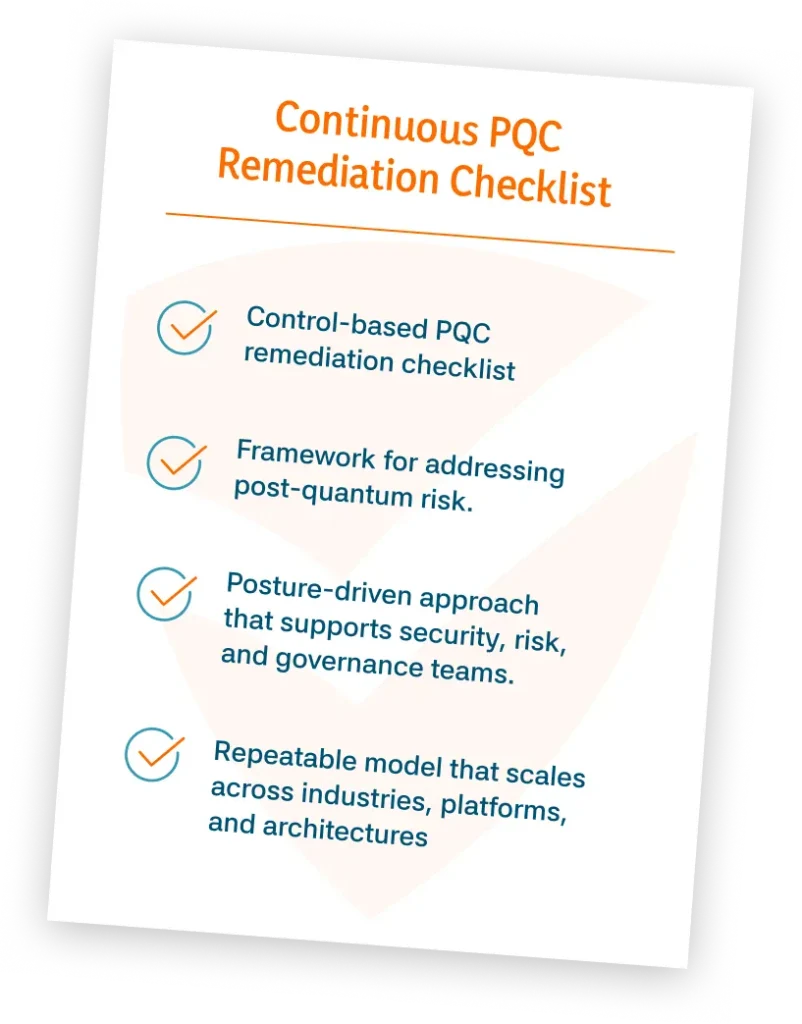
Download the Continuous PQC Remediation Checklist to help identify triggers, prioritize updates, and operationalize post-quantum remediation as systems and requirements change.
Prepare for Cryptographic Change
Without Losing Momentum
Build crypto-agility with visibility, PQC migration, policy, and lifecycle management. Call us at 844.436.2797 or complete the form below to speak to a SafeLogic expert.