FIPS 140 Validation
Understand what FIPS 140 validation requires, why it matters, and how to maintain validated cryptography throughout the product lifecycle.
SafeLogic helps technology companies deploy FIPS 140-validated cryptographic software, obtain a certificate in their name, and manage it as products, platforms, and requirements evolve.
What is FIPS 140?
FIPS 140 is the U.S. government security standard used to evaluate cryptographic software, hardware, and firmware that protects sensitive information.
Through the Cryptographic Module Validation Program (CMVP), cryptographic implementations are tested by accredited laboratories and reviewed against defined security requirements. Successfully validated implementations receive a certificate listed in the NIST CMVP database.
FIPS 140 validation provides customers, assessors, and procurement teams with independent evidence that cryptographic software has been tested and validated against defined security requirements for use under specified conditions.
The current version of the standard is FIPS 140-3, which replaced FIPS 140-2 and introduced updated testing, documentation, and assurance requirements.
On September 21, 2026, remaining active FIPS 140-2 certificates are scheduled to move to the CMVP Historical List. Organizations planning new procurements, product releases, or regulated market expansion should prioritize FIPS 140-3 validated cryptography.
Why FIPS 140 Certification Matters
FIPS 140 certification is important for technology companies serving federal agencies and other regulated markets. It provides verified, independent proof that your cryptographic software meets strict government security standards.
Without FIPS 140 certification, federal agencies treat your product data as unencrypted—giving procurement officers a reason to block acquisitions and stall sales.
However, achieving FIPS 140 certification is only the first step. To keep your certificate active and off NIST’s Historical List, you must continuously manage:
Frequent Software & OS Updates
Ensuring new releases stay within your validated boundary.
Vulnerability Remediation
Rapidly addressing CVEs without invalidating your certificate.
Evolving CMVP Standards
Navigating changing algorithm requirements, policy updates, and transition deadlines.
How FIPS 140 Supports Broader
Compliance Requirements
FIPS 140 validation supports cryptographic requirements across government authorization, cybersecurity, and procurement programs. The exact requirements vary by framework, system, and deployment environment.

FEDRAMP
Validated cryptography for cloud services protecting federal information.

GOVRAMP
FIPS requirements for cloud providers serving state and local governments.
CMMC 2.0
Validated cryptography for applicable protections across the defense industrial base.

Common criteria
Cryptographic validation within broader product assurance evaluations.
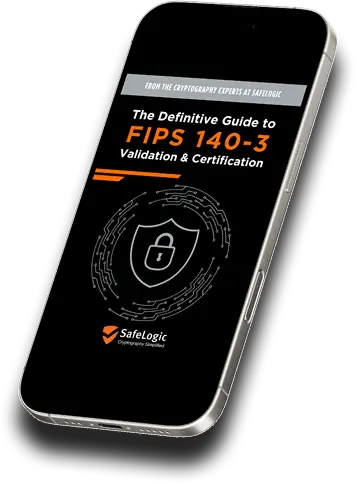
Get The Definitive Guide to FIPS 140-3
Certification & Validation
FIPS 140-3 introduced updated testing, documentation, and lifecycle requirements for cryptographic software. Understanding these requirements is essential when planning a new validation or replacing a FIPS 140-2 dependency.
Download The Definitive Guide to FIPS 140-3 Validation and Certification for a detailed explanation of the current standard and the validation process.
Inside, you will learn:
- FIPS 140-3 Fundamentals: The history, core security benefits, and implementation challenges of the standard.
- Validation Requirements: What organizations must document, test, and submit during the validation process.
- The Future of FIPS: What lies ahead for cryptographic standards, including post-quantum readiness.
- The Accelerated Path: How SafeLogic’s unique validation strategy bypasses the traditional multi-year lab backlog.
FIPS 140 Validated vs. Compliant:
Who Owns the Certificate?
Many companies mistake being “FIPS 140 compliant” for being “FIPS 140 validated.” In modern procurement, relying on a third-party compliance is a significant business risk.
FIPS 140 Validated (Secure & Preferred)
What it is:
A cryptographic module that has completed formal testing by an accredited lab and is awarded an official NIST FIPS 140 certificate issued in your company’s name.
Why it matters:
Government buyers and third-party assessors can verify your certificate instantly in the NIST CMVP database. You have full control over your compliance lifecycle, customer documentation, and vulnerability patching.
FIPS 140 Compliant (The Hidden Risk)
What it is:
Our product bundles or hooks into a cryptographic module validated by someone else (such as an operating system, cloud provider, or open-source library).
Why it matters:
You do not own the certificate. If that third party fails to patch a vulnerability, changes their software boundary, or lets their certificate fall into “Historical” status, your product instantly drops out of FIPS 140 compliance, jeopardizing active public sector contracts.
Traditional FIPS 140 Validation Can
Be Time-Consuming and Costly
Pursuing a FIPS 140 certificate independently requires more than implementing approved cryptographic algorithms. Organizations must define the cryptographic boundary, prepare detailed documentation, complete laboratory testing, resolve findings, submit the validation package, and navigate CMVP review.
Depending on the scope, software maturity, operating environments, testing results, and review process, traditional validation can take two years or more—not including the time required to develop and maintain the underlying cryptographic software.
The process often requires close coordination among:
- Software developers
- Product managers
- Security and compliance teams
- FIPS 140 consultants
- An NVLAP-accredited cryptographic testing laboratory
- CMVP review and comment resolution
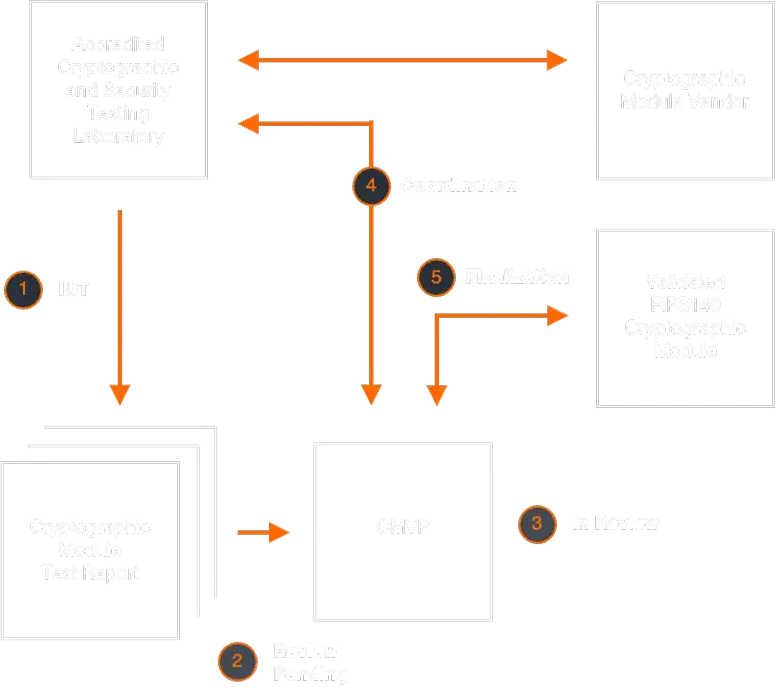
Managing these activities internally can divert specialized engineering resources away from the product roadmap while introducing uncertainty around timelines, costs, and long-term certificate maintenance.
SafeLogic offers a more streamlined alternative.
The SafeLogic Path to FIPS 140 Validation
SafeLogic combines validated cryptographic software, accelerated certification, and ongoing maintenance into one integrated approach.
Integrate with CryptoComply™
FIPS 140-Validated Cryptographic Software
Deploy SafeLogic CryptoComply FIPS 140 validated cryptographic software using interfaces aligned with your language, platform, and architecture, helping teams reduce application changes and integration effort.
Validate with RapidCert™
Expedited Customer-Owned FIPS 140 Certification
Skip the traditional two-year testing backlog. SafeLogic’s RapidCert program leverages our pre-validated software boundaries to obtain an official NIST FIPS 140 certificate in your name in as little as 90 days.
Maintain with MaintainCert™
Ongoing Software and Certificate Maintenance
Avoid the “Historical List”. With SafeLogic’s MaintainCert, we proactively manage software updates, evaluate operating environment changes, patch vulnerabilities, and guide you through algorithm transitions to keep your FIPS 140 certificate continuously active.
Independent FIPS 140 Validation vs. the
SafeLogic Approach
Developing, testing, and validating cryptographic software internally can require significant engineering resources and specialized expertise.
Consideration
Independent Validation
Notes / Compliance Impact
Engineering Effort
Significant internal cryptographic expertise required
Reduced cryptographic development burden
Validation Boundary
May include more proprietary application code
Narrow validation boundary designed to exclude proprietary application code
Laboratory Process
Managed directly across testing, remediation, and submission
Supported through a repeatable validation approach
Operating Environments
Coverage must be planned, tested, and documented internally
Existing coverage across multiple platforms, architectures, and development environments
Certificate Lifecycle
Updates, vulnerabilities, and changes managed internally
Coordinated software and certificate lifecycle support through MaintainCert
Product Roadmap Impact
Validation work may compete with core engineering priorities
Helps teams remain focused on differentiated product capabilities
FIPS 140 and Post-Quantum Readiness
Compliance is a moving target. While you satisfy today’s FIPS 140 requirements, your architecture must prepare for tomorrow’s quantum threats.
SafeLogic helps you achieve true crypto-agility. Our solutions allow you to deploy currently validated classical cryptography today, while cleanly separating application code from the cryptographic layer. This ensures that when NIST-standardized Post-Quantum Cryptography (PQC) algorithms are fully integrated, you can transition your products smoothly without rewriting your software.
FIPS 140 Frequently Asked Questions
What is FIPS 140?
FIPS 140 (Federal Information Processing Standard 140) is a joint U.S. and Canadian government standard used to evaluate and validate the security of cryptographic software and hardware. The standard defines requirements for cryptographic boundaries, roles, authentication, physical security, self-tests, and lifecycle assurance.
What is the transition timeline from FIPS 140-2 to FIPS 140-3?
FIPS 140-3 is the current, active version of the standard. It replaced FIPS 140-2 to align more closely with international ISO standards. On September 21, 2026, remaining active FIPS 140-2 certificates are scheduled to move to the CMVP Historical List, meaning they can no longer be used for new federal procurements.
Can we update our application after receiving a FIPS 140 certificate?
Application updates may be possible without affecting the certificate when proprietary functionality remains outside the validated cryptographic boundary. Changes involving cryptographic software, build environment, operating environment, interfaces, or other validation-relevant components may require additional evaluation. SafeLogic helps customers assess potential certificate impact before release.
Why does a FIPS 140 certificate become "Historical"?
Certificates move to the Historical List because of scheduled transition deadlines (like the FIPS 140-2 sunset), certificate sunset dates (typically 5 years), unresolved security vulnerabilities, or algorithm transitions.
SafeLogic’s MaintainCert is specifically designed to keep your certificate active and prevent it from falling to “Historical” status. MaintainCert helps customers monitor and address software, vulnerability, operating-environment, and validation changes that could affect certificate status. It also supports planned transitions before scheduled sunset dates or broader program changes.
Is FIPS 140 mandatory?
FIPS 140 is mandatory in certain federal use cases and may be incorporated into agency policies, security controls, contracts, and procurement requirements. Whether it applies to a particular product depends on the customer, information being protected, deployment environment, and governing requirements.
How long does FIPS 140 validation take?
Timelines depend on software maturity, the validation boundary, documentation, operating environments, laboratory testing, remediation, and CMVP review. Traditional independent validation can take two years or more. RapidCert provides an accelerated path by building on SafeLogic’s validated cryptographic software and established validation approach.
Ready to Accelerate Your
FIPS 140 Validation?
Let’s discuss your current technology stack, target timeline, and the fastest path to securing your own FIPS 140 certificate.