FIPS 140-3 VALIDATED SOFTWARE
CRYPTOCOMPLY
Go & Native Go
FIPS 140-3 Validated Cryptographic
Software for Go Applications
Secure Your Golang Applications with FIPS 140-3 Validated Cryptography
Go has become a preferred language for cloud-native applications, distributed systems, networking infrastructure, Kubernetes, DevSecOps tooling, and security software. As Go adoption expands across regulated and security-sensitive environments, development teams need cryptography that supports modern application architectures while meeting FIPS 140 requirements.
SafeLogic provides two ways to bring trusted cryptography to Go applications:
- Native Go Cryptography: Implemented directly in the Go language (Zero-CGO).
- Go Bindings: Connecting Go applications to SafeLogic’s OpenSSL drop-in compatible software compiled from C.
This flexibility allows organizations to choose the architecture that best aligns with their application stack, operating environments, compliance requirements, and post-quantum roadmap.
Two Cryptographic Architectures for Go Applications
Go applications are not all built the same. Some development teams want to remain entirely within the native Go ecosystem without managing C toolchains. Others need to preserve an OpenSSL-compatible architecture, standardize cryptography across several programming languages, or integrate Go into an established enterprise product.
The CryptoComply family supports both approaches.
Feature
Native Go
Go Bindings (via CGO)
Implementation
Cryptography implemented natively in Go
Go bindings call into SafeLogic software compiled from C
Integration & Build Model
Native Go implementation (CGO_ENABLED=0)
Go application calls underlying software through bindings
Primary Advantage
Native Go development model & memory-safe architecture
Integrates Go with established, cross-language OpenSSL ecosystems
Best Suited For
Go-first cloud platforms, microservices, Alpine/Kubernetes, and DevSecOps
OpenSSL-based products, multi-language stacks, and established enterprise architectures
Post-Quantum Capabilities
FIPS 140-3 validated classical cryptography + ML-KEM (FIPS 203)
Capabilities depend on underlying product: ML-KEM, ML-DSA, SLH-DSA, and hybrid operation
Which Architecture Fits Your Application?
Choose Native Go Cryptography when:
- Your application is built primarily or entirely in Go.
- Maintaining a native Go architecture with static linking (CGO_ENABLED=0) is required.
- You want to avoid maintaining a C compilation toolchain or external C libraries.
- Native memory safety is a design priority.
- You need FIPS 140-3 validated classical cryptography with integrated ML-KEM support.
Choose Go Bindings when:
- Your application already uses an OpenSSL-compatible architecture
- You need to standardize cryptography across Go, C, C++, Java, Python, .NET, or other environments
- You are integrating Go into an established enterprise product
- You require a broader suite of post-quantum algorithms (including ML-DSA and SLH-DSA) or hybrid classical/PQC operation.
Option 1: CryptoComply Native Go
FIPS 140-3 Validated Cryptography Implemented Natively in Go
CryptoComply Native Go provides cryptography implemented directly in the Go language rather than relying on bindings into software compiled from another language. Development teams can remain within the native Go ecosystem while gaining the assurance of FIPS 140-3 validated cryptography, support for NIST-standardized post-quantum cryptography, and commercial support from SafeLogic.
Maintain the simplicity, portability, and reliability of Go binaries (CGO_ENABLED=0) without glibc dependencies, C compilation toolchains, or cross-compilation friction.
Use cryptographic software implemented within Go’s memory-safe environment to reduce exposure to classes of vulnerabilities such as buffer overflows and memory corruption.
Deploy native Go cryptographic software validated under NIST CMVP Certificate #5349 to support FIPS requirements across federal, defense, and regulated enterprise environments.
Incorporate a modern Go cryptographic foundation designed to support the transition to post-quantum standards, beginning with ML-KEM.
Option 2: CryptoComply Go
Go Bindings for OpenSSL-Compatible Cryptography
Connect to SafeLogic’s OpenSSL drop-in compatible cryptographic software to minimize changes to existing application logic.
Standardize on a shared cryptographic foundation across products and services written in Go, C, C++, Java, Python, and .NET.
Maintain compatibility with OpenSSL-based application logic, supported third-party libraries, and established enterprise software architectures while reducing the need for low-level code changes.
Optionally integrate with SafeLogic’s ESV-certified entropy source (Certificate #E241) to satisfy strict NIST and NIAP entropy requirements for security-critical environments.
Supports greater algorithm and configuration flexibility for organizations planning ongoing cryptographic modernization.
Post-Quantum Cryptography for Go Applications
Preparing for post-quantum migration requires more than swapping algorithms. Development teams need practical ways to introduce NIST-standardized post-quantum cryptography into existing Go products without disrupting application performance, compliance boundaries, or system interoperability.
CryptoComply Go provides post-quantum capabilities aligned directly with your chosen application architecture:
ML-KEM for Native Go Key Establishment
Standardized in FIPS 203, ML-KEM enables applications to establish shared secrets resistant to quantum threats. CryptoComply Native Go integrates ML-KEM directly within the native Go ecosystem, letting developers deploy quantum-resistant key exchange without CGO overhead.
Expanded Signature Suites via Go Bindings
For workloads requiring quantum-resistant digital signatures and authentication, bindings-based deployments can connect Go applications to SafeLogic’s CryptoComply FIPS 140-3 Provider with PQC. This provides access to ML-DSA and SLH-DSA in addition to ML-KEM.
Hybrid Classical and Post-Quantum Operation
PQC migration won't happen overnight. Hybrid cryptography pairs NIST-standardized post-quantum algorithms with established, FIPS-validated classical algorithms (like RSA and ECDSA). This approach can help protect long-lived sensitive data against Harvest Now, Decrypt Later risks while supporting a phased migration that preserves access to FIPS 140-3 validated classical cryptography.
Accelerate and Maintain Your
FIPS 140-3 Validation
Building cryptographic software internally and navigating the NIST validation process can require significant engineering resources, specialized expertise, and ongoing maintenance.
SafeLogic combines validated cryptographic software, accelerated certification, and lifecycle support to reduce that burden.
RapidCert
Obtain a FIPS 140-3 certificate associated with your organization and product in as little as 90 days.
RapidCert builds on SafeLogic’s validated cryptographic software, established documentation, and repeatable validation processes to reduce the time, engineering effort, and uncertainty associated with traditional validation.
MaintainCert
Keep your software and NIST certificate active over time. SafeLogic handles ongoing updates, vulnerability mitigations, operating environment additions, and CMVP certificate maintenance.
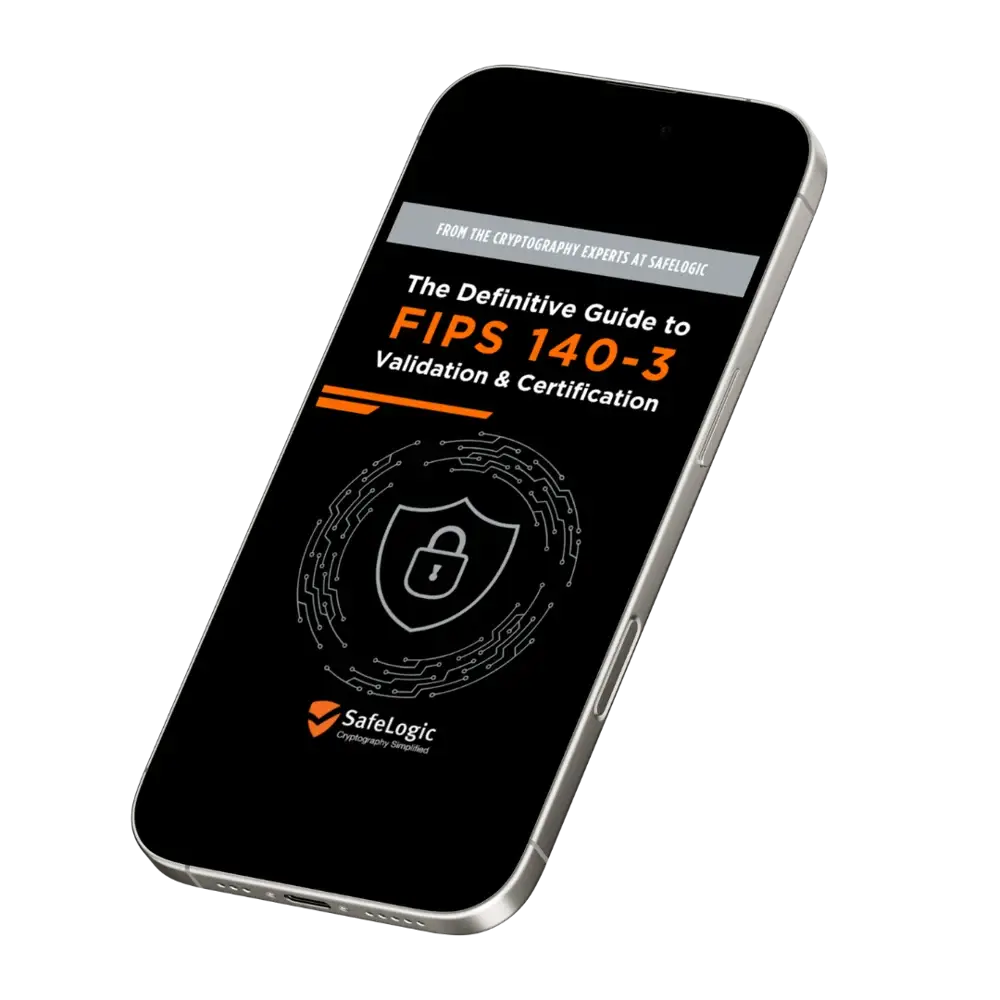
Get The Definitive Guide to FIPS 140-3 Certification & Validation
Navigating FIPS 140-3 validation doesn't have to stall your release cycle. Learn key deadline milestones, software boundary definitions, and how to achieve a customer-owned NIST certificate in months instead of years.
Frequently Asked Questions
What is the difference between Native Go Cryptography and Go Bindings?
Native Go Cryptography implements cryptographic operations directly in Go without relying on external C libraries. Go Bindings use language-bridging capabilities to call into SafeLogic cryptographic software compiled from C.
Is CryptoComply Native Go FIPS 140-3 validated?
Yes. CryptoComply Native Go is validated under NIST CMVP Certificate #5349.
Can CryptoComply Native Go be used in a CGO_ENABLED=0 build environment?
Yes. CryptoComply Native Go is designed specifically for native Go environments, enabling simple static linking and zero CGO dependencies.
Does CryptoComply Go support post-quantum cryptography?
Yes. Post-quantum capabilities vary by solution and underlying implementation. CryptoComply Native Go includes ML-KEM support. Supported bindings-based configurations can provide access to ML-KEM, ML-DSA, SLH-DSA, and hybrid classical and post-quantum operation.
How quickly can we obtain a customer-owned FIPS 140-3 certificate?
Through SafeLogic’s RapidCert program, software vendors can achieve a customer-owned FIPS 140-3 certificate associated with the company’s organization and product in as little as 90 days.
What is hybrid post-quantum cryptography?
Hybrid cryptography combines a post-quantum algorithm with an established classical algorithm. This approach allows organizations to begin protecting systems against future quantum threats while maintaining interoperability and access to FIPS 140-3 validated classical cryptography during the transition.
Can SafeLogic help my organization obtain its own FIPS 140-3 certificate?
Yes. RapidCert provides an accelerated path to a FIPS 140-3 certificate associated with your organization and product. Customer-owned certificates can be achieved in as little as eight weeks, depending on the scope and requirements of the validation.
How does SafeLogic support CryptoComply Go after deployment?
SafeLogic provides commercial engineering and product support. MaintainCert also supports ongoing software updates, vulnerability response, operating environment additions, certificate maintenance, and other changes throughout the product lifecycle.
Ready to Bring FIPS 140-3 Validated Cryptography to Your Go Applications?
Call us at 844.436.2797 or complete the form to request an evaluation.