Get FIPS 140-3 Certified
in Only 90 Days
Quickly secure your FIPS 140-3 certification & stay compliant for years.
Everything You Need to Know About FIPS 140-3 Validation
From Basics to SafeLogic’s Accelerated Strategy
Navigating FIPS 140-3 validation can be complex, but it’s essential for ensuring that your cryptographic modules meet the highest federal security standards.
In this comprehensive guide, SafeLogic’s cryptography experts walk you through everything you need to know—from the history and benefits of FIPS 140-3 to the challenges and transition from FIPS 140-2.
Whether you’re new to FIPS or need to update from FIPS 140-2, this guide is your essential resource for success.
Inside You’ll Learn:
- About FIPS 140-3: History, Benefits and Challenges
- Transitioning from FIPS 140-2 to FIPS 140-3
- What is Required to Get FIPS 140-3 Validated?
- What Does the Future Entail for FIPS 140-3?
- SafeLogic’s FIPS 140-3 Strategy
Fast-track your path to FIPS 140-3 validation and certification.
Complete the form to download the eBook now!
FIPS 140-2 Expires on 9/21/26.
Don't Risk Your Federal Contracts.
FIPS 140‑2 certifications must transition to FIPS 140‑3 before September 21, 2026, or it will no longer be considered compliant by government buyers. Delaying validation now could seriously jeopardize your upcoming federal contracts.
With SafeLogic’s unique FIPS 140-Validated Cryptography Software, we can get you a FIPS 140-3 certificate in your own company’s name in just 90 days, versus the two+ years it usually takes.
Stay Off the Historical List. Stay Compliant. Stay Competitive.
- Stay on the official FIPS 140-3 compliant list
- Avoid FIPS 140-2 end-of-life risks
- Maintain visibility with federal buyers and procurement officers
- Don’t get left behind when your current module goes “historical”
Traditional FIPS 140-3 Certification
Takes Two or More Years
Getting a FIPS 140-3 certificate involves documentation, testing, and validation. This process can take two or more years, not counting the time required to develop the cryptography software.
It Requires Extensive Collaboration Between:
- Developers
- Product managers
- Compliance Experts
- FIPS Consultants
- NIST-Authorized Certification Lab
- NIST’s Cryptographic Module Validation Program (CMVP)
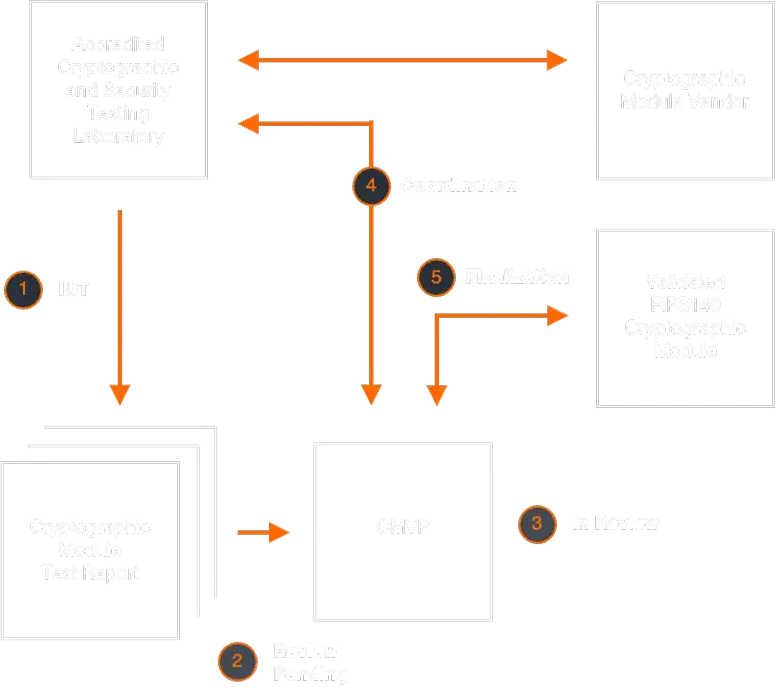
If You Haven’t Started the Transition from FIPS 140-2 Yet, Your Product is at Risk of Going ‘Historical’.
Since the conventional FIPS 140-3 certification process usually takes two+ years, starting now results in a certificate in August 2027 at the earliest. This means you risk being out of market for at least a year!
FIPS 140-3 Validated / Certified is the
Gold Standard, While FIPS 140 Compliant
is a Dangerous Strategy
Compliant, validated, and certified are NOT synonyms when it comes to FIPS 140-3. Thinking they are can lead to costly mistakes.
FIPS 140 Validated means your company's cryptographic module has passed a formal testing process with a NIST-approved lab and received a FIPS validation certificate in your company’s name. This certificate is listed publicly.
FIPS 140 Compliant uses a FIPS 140 validated cryptographic module from an open-source, OS or cloud services provider. While this might seem like a good idea, this FIPS compliance strategy is extremely risky for two reasons:
- FIPS compliant today may not be FIPS compliant tomorrow if someone else’s module goes out of compliance (e.g., goes Historical). This often happens when a vendor declares an older product ‘end-of-life’. When that happens, it’s your public sector sales that are at risk.
- Government procurement agents may block the acquisition of products that do not have FIPS certification in their own name in the CMVP database. They will want to see that the CMVP certificate has an organization’s specific details.
SafeLogic’s CryptoComply customers don’t have these challenges.Our FIPS 140-3 validated software gets FIPS 140-3 certificates and listings in the CMVP database in your company’s name. And it takes just 90 days, not two years! Then we maintain the software and your FIPS 140 certifications, ensuring you remain in “Active” status until your sunset dates.
Why Choose SafeLogic for
FIPS 140-3 Validation?
Get FIPS 140-3 Validated Faster, Launch Sooner,
and Maintain Compliance Over Time
SafeLogic speeds up FIPS validation, getting you certified in a fraction of the usual time. Get your product to market quicker, saving valuable time and driving revenue sooner.
With SafeLogic, you don’t just comply—you get fully validated, meaning the certification is in your name or your company’s name. This ensures you maintain control and credibility.
Leverage SafeLogic’s FIPS 140 experts to streamline your process, freeing up your team to focus on higher-value projects while enjoying predictable, fixed costs over time.
Ensure you remain in good standing with changing NIST FIPS 140 requirements. Our experts help navigate evolving standards seamlessly so you stay compliant without disruption or delays.
How to Transition from FIPS 140-2 to FIPS 140-3
Learn the key differences between FIPS 140-2 vs 140-3, what’s changing, and strategies to accelerate your transition in our expert-led webinar.
What’s the Difference Between
FIPS 140-2 and 140-3?
Get FIPS 140-3 Validated Faster, Launch Sooner, and Maintain Compliance Over Time
By aligning with these international standards for cryptographic modules and testing methods, FIPS 140-3 ensures global interoperability and recognition of validated cryptographic modules worldwide. These international standards are based on FIPS 140-2.
FIPS 140-3 provides more detailed and stringent requirements for physical security, particularly at higher security levels. This includes better protection against environmental attacks and unauthorized physical access.
The updated standard places greater emphasis on secure key management practices, ensuring that cryptographic keys are generated, stored, and destroyed securely.
With the growing prevalence of software-based cryptographic modules, FIPS 140-3 introduces more comprehensive requirements for software security. This includes secure coding practices, regular software updates, and protection against software vulnerabilities.
The testing and validation processes have been updated to reflect the latest advancements in cryptographic technology and security testing methodologies. This ensures that validated modules meet the highest security standards.
Three Unique FIPS 140 Offerings
Keep You Secure and Validated... Fast!
Getting your cryptographic software certified by NIST for FIPS 140-3 can take two or more years. SafeLogic slashes that timeline to just 90 days and ensures your certification stays active with the following three key capabilities.
Click on the boxes below to learn more about each of our FIPS 140 service offerings.
CryptoComply
CryptoComply is SafeLogic’s flagship software, a family of FIPS 140 validated cryptographic software modules. They deliver “Drop-in Compliance” as direct replacements for popular open-source crypto providers.
RAPIDCERT
SafeLogic revolutionized the FIPS industry twelve years ago with RapidCert, the industry’s first expedited rebranding program. Get FIPS certification of your CryptoComply solution, in your name, in only two months with RapidCert.
MAINTAINCERT
Now SafeLogic is revolutionizing FIPS again with MaintainCert. FIPS certificates go ‘historical’, meaning they are no longer valid, all the time. Not with MaintainCert, SafeLogic’s new white-glove support service.
SafeLogic is Trusted By:






FAQs
What is fips 140 certification?
FIPS 140 certification is a U.S. government standard that specifies security requirements for cryptographic modules used within any government system with encryption to protect sensitive information.
Why is FIPS 140 certification important?
It ensures that cryptographic products meet federal security standards, making them reliable for protecting sensitive data, especially in government and regulated industries. If you don’t have FIPS 140 certification, procurement agents can block the purchase of your product.
What are the levels of FIPS 140 certification?
The FIPS 140-3 standard provides four increasing, qualitative levels of security: Level 1, Level 2, Level 3, and Level 4. These levels are intended to cover the wide range of potential applications and environments in which cryptographic modules may be employed. Each subsequent level builds upon the requirements of the previous level. These levels are clearly indicated on each validation certificate. The strength and functionality of the cryptography is the same for each level.
Do I need FIPS 140 validation for FedRAMP, StateRAMP, CMMC, Common Criteria, and DoDINAPL?
In short, yes. These government programs have all been built using NIST publications as building blocks, so they all reference NIST’s existing advisories and guidance on the proper usage of cryptography, known as FIPS 140.
For more technical insight on specific programs and dependencies, check out our repository of whitepapers.
How long does the FIPS 140 certification process take?
Traditionally, the certification process can take two or more years, depending on the complexity of the cryptographic module and the validation back log. However, with solutions like SafeLogic, it can be expedited to around three to four months.
Who conducts the FIPS 140 certification?
The certification is conducted by the National Institute of Standards and Technology (NIST) and its Canadian equivalent through the Cryptographic Module Validation Program (CMVP). Accredited laboratories evaluate cryptographic modules to ensure compliance with FIPS 140 standards.
What is the difference between FIPS 140-2 and FIPS 140-3?
FIPS 140-3 is the updated version of the standard, which includes new security requirements and addresses advances in technology and cryptography, while FIPS 140-2 is the older version.
What types of products need FIPS 140 certification?
Any product that uses cryptography to secure sensitive information sold to the government, including software applications, hardware devices, and firmware, may require FIPS 140 certification.
How often do I need to renew my FIPS 140 certification?
FIPS 140 certification expires every five years. Maintaining compliance with evolving standards and conducting regular reviews of your cryptographic module is essential.
Can I use a non-FIPS certified product for government projects?
No. Government agencies require FIPS 140 certified products to ensure compliance with federal regulations when handling sensitive data.
How can SafeLogic help with FIPS 140 certification?
SafeLogic streamlines the certification process, reducing the time to achieve FIPS 140 certification from two years to two months, and offers ongoing support to maintain certification over time.
CryptoComply Supports a Broad Range of
Platform Types, Operating Systems, Languages,
and Open Source Modules Including ...
Drop-In Compliance
Mobile Device
Android
iOS
iPadOS